Factory operations
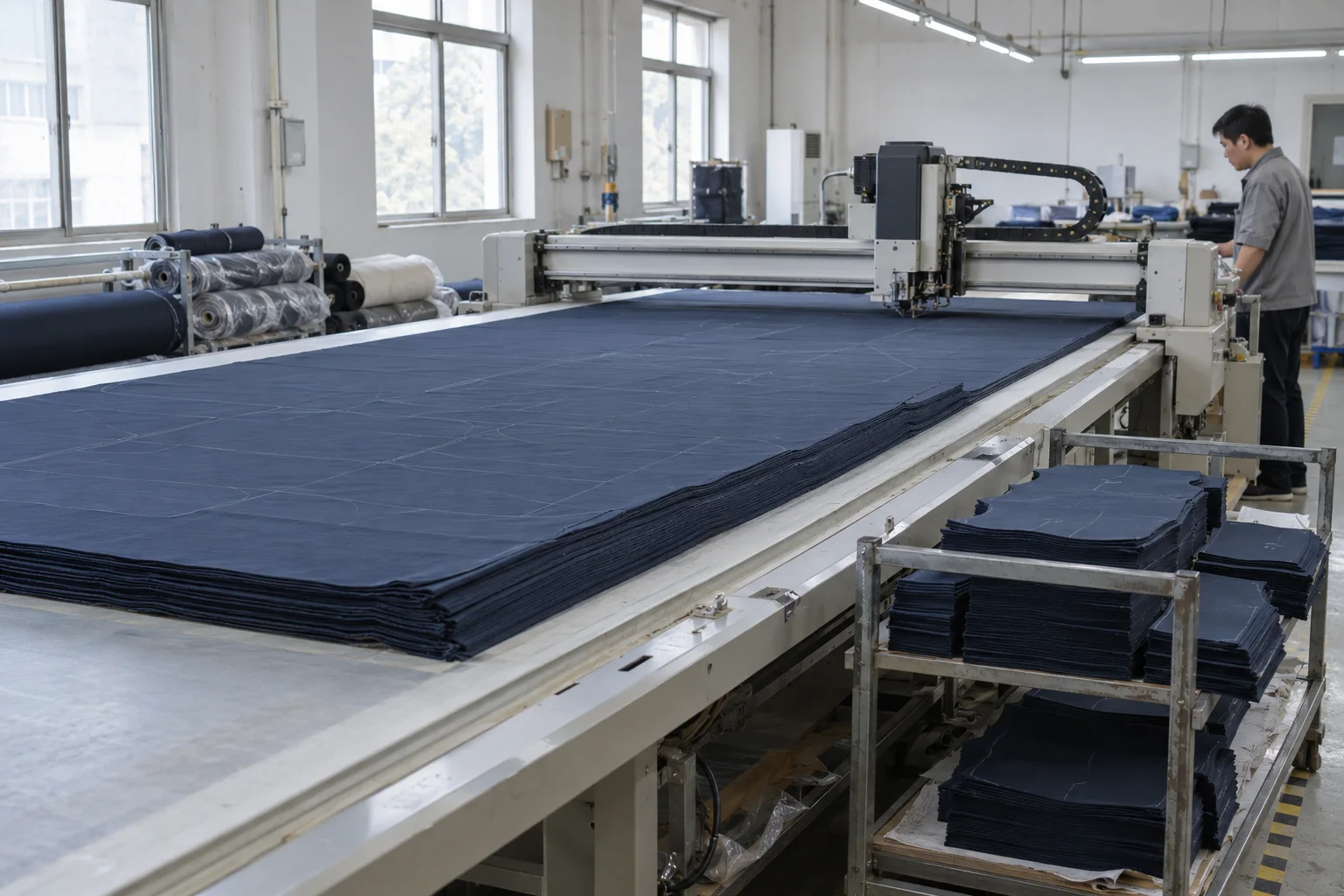
Our production setup includes computer-aided pattern making, automated fabric spreading and cutting, sewing, needle detection, pressing and packing. Sewing equipment includes lockstitch, overlock and coverstitch machines.
Manufacturing & quality
Confirm the garment details from sampling to packing.
Our work connects pattern making, sampling, sourcing, garment manufacturing and quality checks. Customer specifications and sample feedback guide the process.
Follow the production process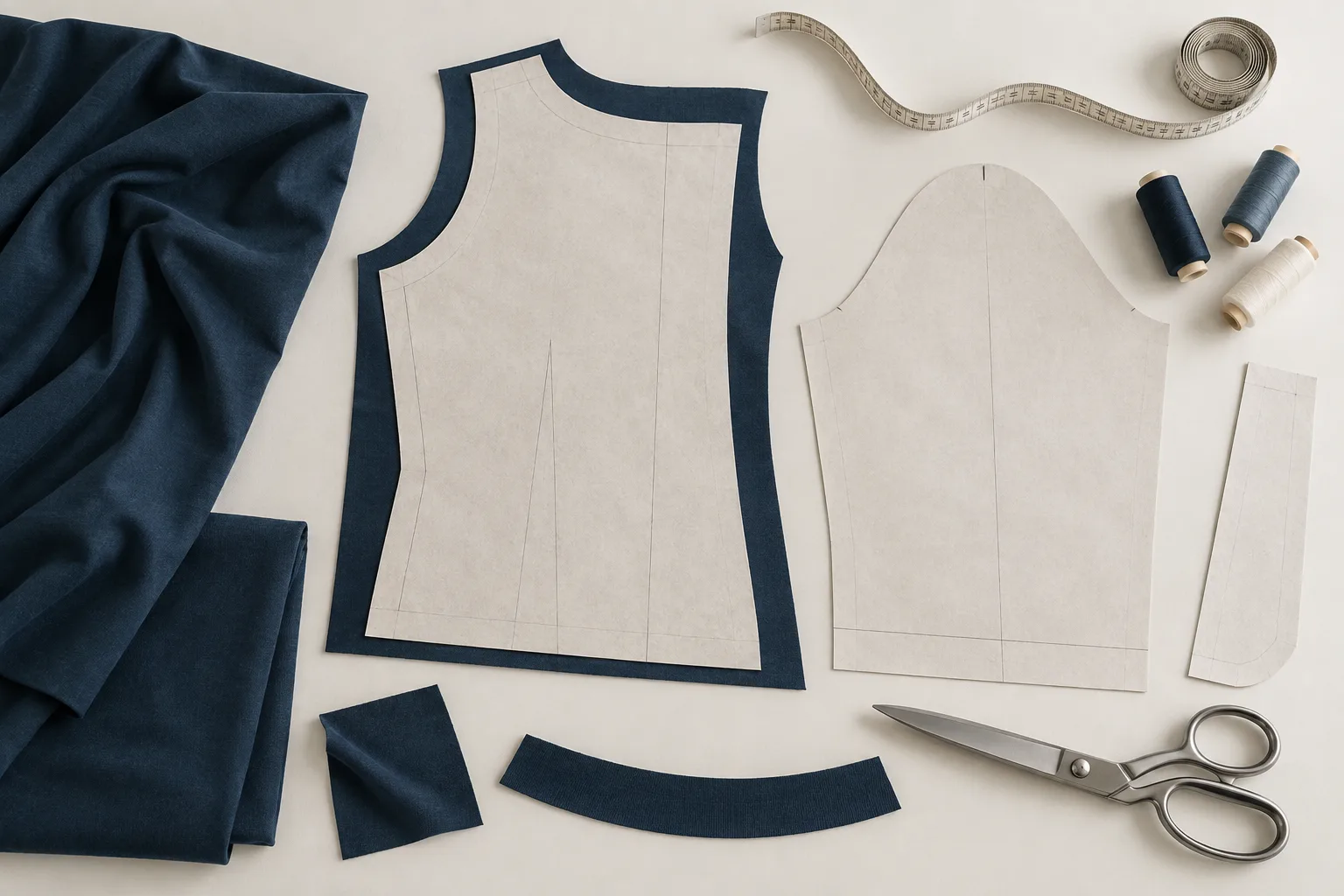
The manufacturing route
The steps below combine our recorded production process with practical checkpoints to discuss for your order. Exact arrangements are agreed for each order.
Start with your drawings, technical specifications or reference sample. Clarify fabric, size range, construction, quantities and destination requirements.
To agree: the product requirements
Our in-house sample room prepares patterns and a first sample. Review fit and construction, then work through revisions based on customer feedback.
To agree: sample details and changes
After order confirmation, organize the required fabric and trims and prepare the pre-production sample.
To agree: materials and pre-production sample
Use the agreed patterns and production requirements for cutting and sewing. Coordinate specialist decoration with external partners when required.
To agree: construction and process requirements
Carry out checks during production and on finished garments. Customer representatives or third-party inspectors may inspect according to the order arrangement.
To agree: inspection scope and acceptance criteria
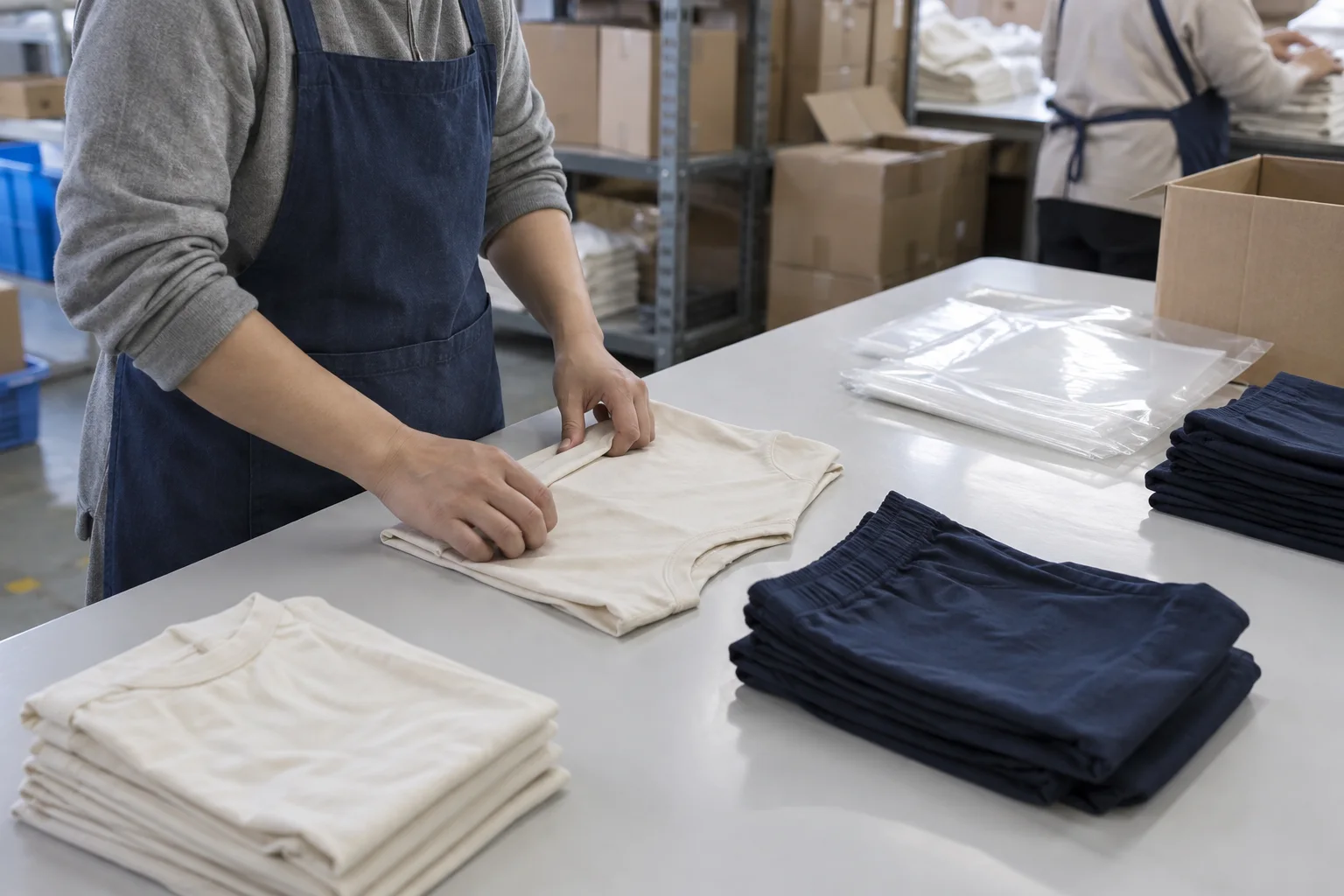
Press, fold and pack to the agreed instructions. Provide shipment samples where requested by the customer.
To agree: assortment, packing and shipment samples
Sample and production timing depend on style complexity, material availability, approvals and the production schedule.
Quality checkpoints
Our established overview covers four stages. The example review points below should be agreed against the buyer’s specification.
Fabric and trims against the selected requirements.
Material specification, color reference and approved trims.
Construction, workmanship and key measurements.
Approved sample, construction notes and tolerances.
Appearance, measurements, labels and specified finishing.
Agreed acceptance criteria and inspection requirements.
Folding, assortment, packaging and carton instructions.
Packing specification and any shipment-sample request.
On the production floor
The approved patterns and sample guide garment construction. Packing instructions define how the finished order is prepared.
Production support
See which processes are carried out at the factory and which involve suppliers or external partners.
Our production setup includes computer-aided pattern making, automated fabric spreading and cutting, sewing, needle detection, pressing and packing. Sewing equipment includes lockstitch, overlock and coverstitch machines.
Fabric, trims and packaging can be sourced with suppliers. Printing and embroidery are handled by external partners; additional production support may be discussed where needed.
Third-party testing can be arranged according to garment and buyer requirements. The required tests, reports, inspection method and responsibilities should be confirmed for the order.
Working together
Style complexity, special fabric requirements and the sampling queue can all affect timing. The schedule should be discussed once the reference and materials are understood.
We coordinate these processes with external partners. Artwork, placement, method and sample expectations should be confirmed before sampling.
Company background records inspection by customers’ domestic representatives or third-party inspection organizations. The scope, timing and acceptance criteria need to be agreed for the order.
Share the destination-market and buyer requirements at the start. Relevant documents and test arrangements need to be reviewed for the actual product, manufacturing entity and order.
Bring the product details and your sampling, inspection and packing requirements.